DeepSeek2026-09-22 01:51:56DeepSeek says it is training a 2 trillion-parameter model and planning an 8 trillion-parameter versionDeepSeek CEO Liang Wenfeng told investors that the company is training a 2 trillion-parameter model and plans to develop an 8 trillion-parameter model afterward. The company’s current flagship, V4-Pro, has 1.6 trillion total parameters and has been open-sourced with 49 billion activated parameters disclosed. Among ultra-large models with publicly available weights, Moonshot AI’s Kimi K3 stands at 2.8 trillion parameters. Kimi K3 uses a mixture-of-experts, or MoE, architecture, with 104 billion parameters activated per token out of its 2.8 trillion total. On that basis, DeepSeek’s planned 8 trillion-parameter model would be close to nearly three times that scale. DeepSeek also completed a fundraising round of more than 50 billion yuan in July, reaching a valuation above $50 billion, according to ChainCatcher.430
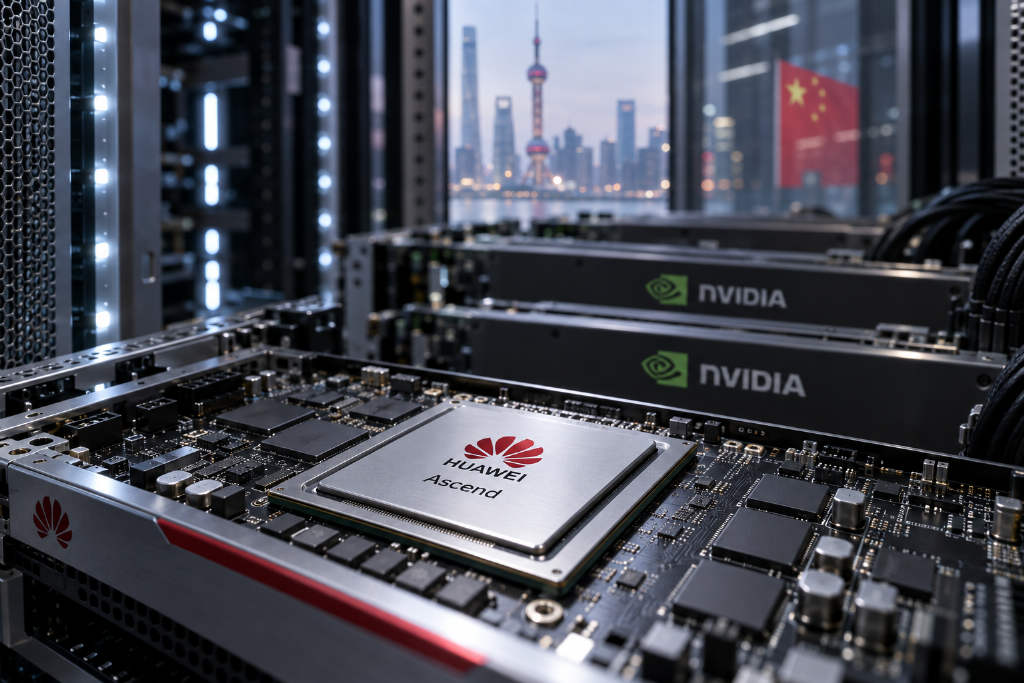
DeepSeek2026-09-22 01:48:59DeepSeek names domestic-chip training a key bet while still relying on NvidiaDeepSeek CEO Liang Wenfeng told investors in a recent closed-door meeting that training large language models on domestic chips, including Huawei processors, is one of the company’s biggest bets and "must succeed," according to The Information, which cited people familiar with the matter. The report said DeepSeek expects to receive a new batch of Huawei chips for training as early as the fourth quarter of this year, though the specific model and shipment size were not disclosed. Liang said Huawei chips could catch up with Nvidia within a few years, and that DeepSeek wants to adapt its systems early to hardware beyond Nvidia. For now, however, the company is still using Nvidia chips to train its models. Liang had estimated in May that training the most advanced large models would require about 50,000 Nvidia GB300 chips, or roughly 200,000 Huawei Ascend 950 chips, with Huawei’s limited supply then seen as the main constraint.360
DeepSeek2026-09-10 09:33:23DeepSeek’s new funding round targets a 500 billion yuan valuation, with markets betting an IPO could push it past 1 trillionDeepSeek is drawing fresh market attention ahead of a potential IPO, with investors now discussing a valuation range that could eventually reach 1 trillion yuan or even 2 trillion yuan. According to the source material, the company sold only about 10% of its equity in its first funding round, raising more than 50 billion yuan at a valuation of $50 billion. At that stage, founder Liang Wenfeng required verification of the identities of all participating LPs. In the second round, which began in July, foreign media reported that DeepSeek planned to raise another 50 billion yuan and was seeking a 500 billion yuan valuation. The Financial Times also said Liang had started personally reviewing some final investors in an effort to preserve control of the company and reduce governance risks that could emerge before an IPO. The report added that while a listing is still some time away, current market expectations have already shifted higher. It also noted that Zhang Yiming remained China’s richest person in 2026 on the Forbes China mainland rich list, with a net worth of $69.3 billion. If DeepSeek’s valuation does break through the 1 trillion yuan mark, Liang’s relatively high ownership stake could put him in position to surpass Zhang.750
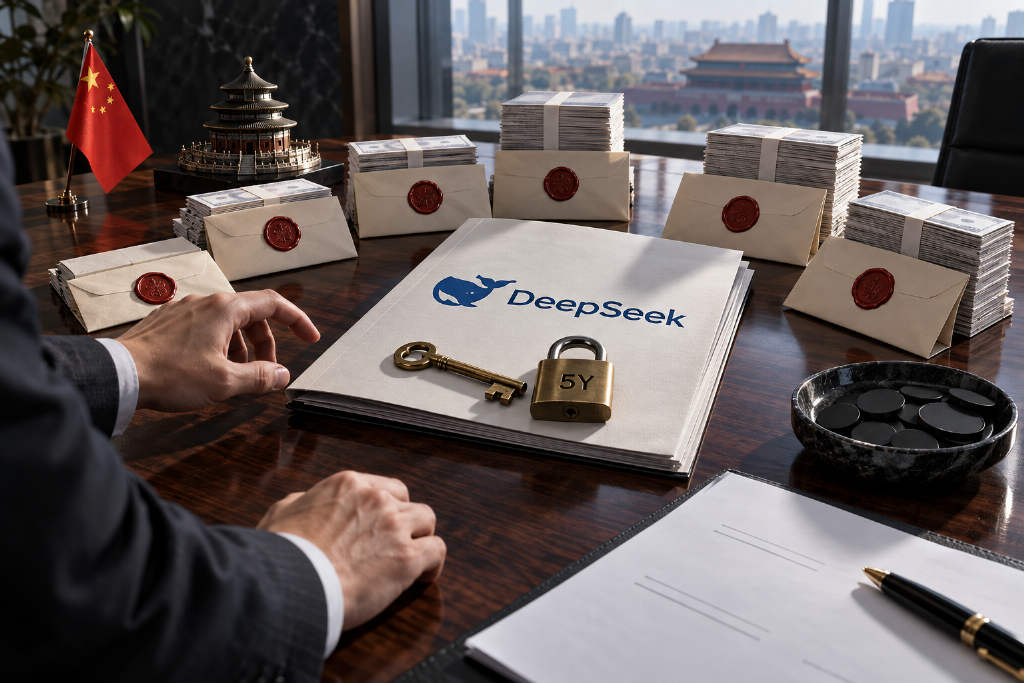
DeepSeek2026-09-09 02:09:11DeepSeek financing round values company at about $71 billion as secondary SPV access fees climb above 15%DeepSeek is raising a new round at a pre-money valuation of about $71 billion, according to a BlockBeats brief citing Beating AI. Just one month ago, the company completed a first funding round of $7 billion at a valuation of about $52 billion, implying an increase of roughly 37% in a month. Demand appears to remain strong even though the new round reportedly comes with a five-year lock-up and no voting rights. Investors unable to secure direct allocations have begun seeking indirect exposure through institutions that already obtained quota. Those firms are setting up special purpose vehicles, or SPVs, to pool outside capital. The brief said some first-layer vehicles are charging a 6% entry fee, second-layer structures are charging 8%, and lower-tier channels are asking for more than 15%. In addition, they may take as much as 40% of investment profits. The report contrasted those terms with more typical SPV arrangements, which usually charge around a 2% upfront fee and 20% carried interest. The secondary structures were not initiated by DeepSeek, the brief said. Financial Times was cited as saying founder Liang Wenfeng has started personally reviewing the final investor list and checking the capital providers behind it, with the aim of preventing shares from ending up in the hands of unidentified entities and reducing governance risks tied to a complicated shareholder structure ahead of a possible future IPO.870
DeepSeek2026-08-28 11:58:27DeepSeek Plans 2027 STAR Market IPO at $52B Valuation; Founder Pivots Fund to Pre-IPOAccording to a report from CryptoBriefing, as published by Techub News, DeepSeek founder Liang Wenfeng is adjusting the strategy of his quantitative hedge fund High-Flyer, shifting its focus toward pre-IPO investments in Chinese technology companies. The fund has already secured a Pre-IPO quota of about $26 million in CXMT, a Chinese maker of memory chips, in 2026, and it has also taken a stake in Unitree Robotics, a robotics company. This new direction means High-Flyer is now buying into private companies before they go public. DeepSeek itself raised $7.4 billion in external financing in June 2026, at a valuation of about $52 billion. Liang Wenfeng personally contributed roughly $3 billion to that round. The company now plans to list on Shanghai's STAR Market in 2027. Its investment focus on chips, AI and advanced manufacturing ties in with the commercialization of its AI tools. The original story was reported by CryptoBriefing.970
DeepSeek2026-08-25 10:43:08Zhong Shanshan indirectly backed DeepSeek through his investment vehicle, with the stake estimated at about RMB 354 millionDeepSeek’s first financing round is drawing renewed attention as the company moves into a second round, with more details emerging about who got in early. Public ownership records cited in the report show that Zhong Shanshan, China’s richest man and founder behind the Nongfu Spring and Wantai Bio businesses, indirectly invested in DeepSeek through a chain of entities linked to Guanzi Venture Capital. Based on the structure described in the article and Tianyancha corporate data, the investment is estimated at roughly RMB 354 million. The report says DeepSeek’s first round, completed in June, included state-backed capital, market-oriented institutions, internet companies, and a RMB 5 billion commitment from CATL. It also names industrial capital from firms such as Andon Health, By-Health, and Septwolves. For Zhong, the DeepSeek deal stands out because it is described as his first move into the AI large-model segment, even though Guanzi Venture Capital had previously appeared as a pre-IPO shareholder in AI chip company Lightelligence. The article also maps a broader technology investment footprint under the Yangshengtang system, including Qiantang New Materials Laboratory and the Kunshan Gewu Zhizhi fund, both of which have been active in hard-tech areas such as new materials, photonic chips, superconducting equipment, embodied intelligence, and solid-state batteries.1160
DeepSeek2026-08-14 08:29:00DeepSeek V4 Pro 0813 draws debate over stability, pricing and product usabilityDeepSeek’s V4 Pro 0813 release has triggered a fresh round of debate in the community, with users split over hands-on performance and version stability. The company’s shift to peak-and-valley API pricing has also changed how users judge its cost-effectiveness, an area where DeepSeek had previously been seen by some as an easy default choice. At the product level, Harness, along with its plug-in architecture and Agent foundation, is described as ambitious, but it has also been criticized for feeling too geared toward highly technical users. The piece argues that DeepSeek’s challenge now goes beyond building a stronger model. It also needs to make performance more consistent, pricing easier to understand, and products easier to use. Against that backdrop, the shift in community language around founder Liang Wenfeng — from "Liang Sheng" to "Xiao Liang" — is framed not as a collapse in reputation, but as a sign of a tech company moving into a more mature product stage.1260
DeepSeek2026-08-12 08:48:00DeepSeek founder Liang Wenfeng’s net worth jumps 3,850% in one yearPANews, citing IT Home, reported on Aug. 12 that financial research firm bestbrokers compiled data from Forbes’ real-time billionaires ranking and found a sharp rise in the wealth of DeepSeek founder Liang Wenfeng. According to the report, Liang’s net worth climbed from $1 billion in 2025 to $39.5 billion in 2026 over the period from July 27, 2025 to July 27, 2026. Using the exchange-rate conversion listed in the article, those figures were equal to about 6.755 billion yuan and 266.837 billion yuan, respectively. The report said the increase amounted to 3,850% in a single year, placing Liang at the top of the global billionaire ranking by growth rate. The original item also carried a standard disclaimer saying the content was provided for market information only and did not constitute investment advice.390